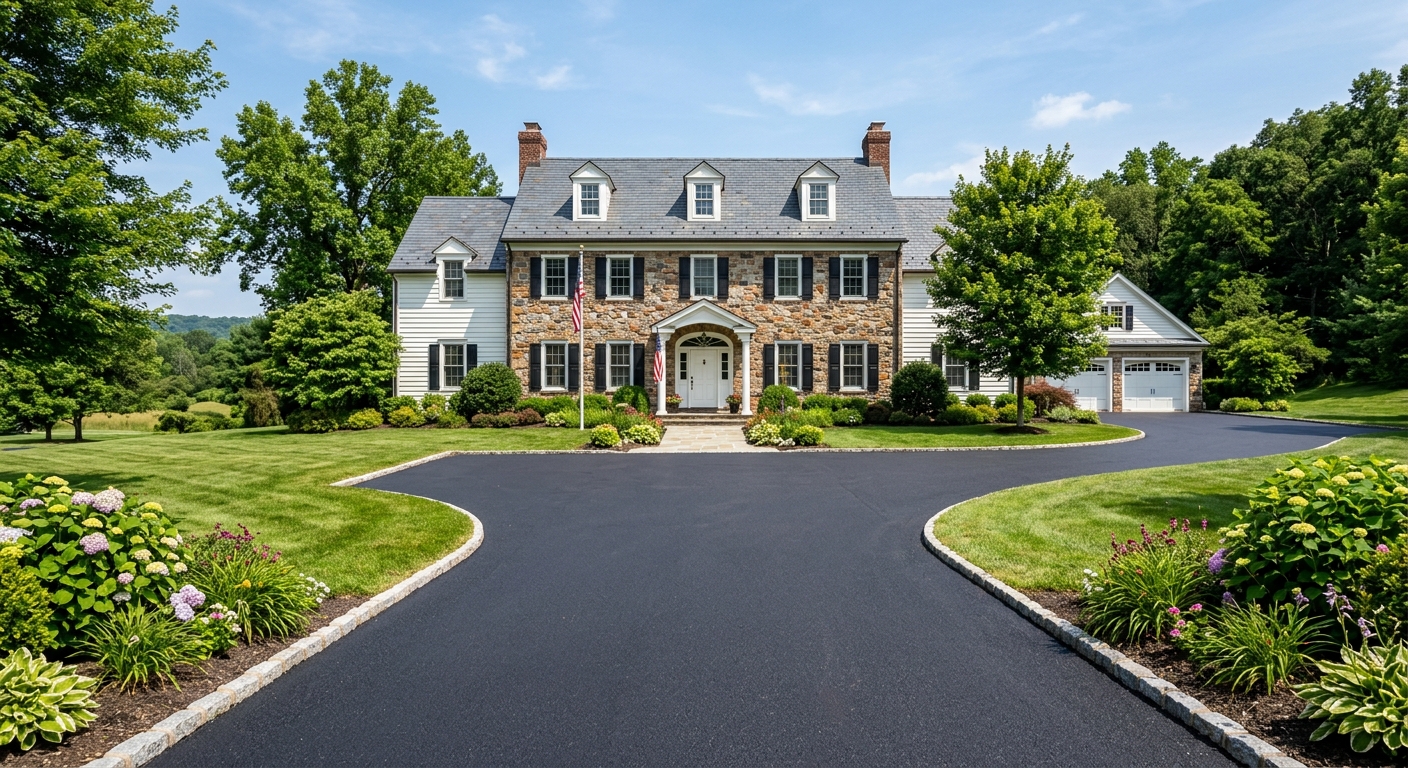
Driveway paving costs in Valley — 2026
In Valley, where 60.0% of homes are single-family and the homeownership rate stands at a high 81.8% (U.S. Census Bureau, ACS 2024), driveway paving is a home improvement most residents will face at least once. Pricing here reflects more than just the top layer you can see; freeze-thaw cycles common in southeastern Pennsylvania and Valley’s underlying limestone and dolomite soils mean the real costs often lie below the surface, in proper subgrade prep and base thickness. You’ll likely find wide swings between quotes, but that isn’t usually from differences in surface material—it’s in what’s buried: the stone base, drainage, and excavation work. A so-called good deal might skimp here, dooming you to cracked pavement and costly repair within a few winters.
Most Valley driveways were last paved decades ago, and now need full-depth replacement, not just a fresh overlay. The table below compares realistic costs by service, lifespan, and target need. Pay attention to the base: it’s what separates a 30-year driveway from one that fails after the first freeze.
| Service |
Best for |
Lifespan |
Price range |
| Asphalt — full replacement with new base |
failed base, structural cracking |
20–30 yrs |
$3,800–$9,900 |
| Asphalt overlay / resurfacing |
sound base, surface cracking only |
8–15 yrs |
$1,650–$4,900 |
| Sealcoating — single application |
preventive maintenance on sound asphalt |
2–4 yrs |
$225–$750 |
| Concrete — new installation |
long service life, low maintenance |
30–50 yrs |
$5,500–$13,000 |
| Crack filling and patching |
isolated cracks under a quarter inch |
1–3 yrs |
$200–$800 |
| Gravel driveway |
rural, budget, long runs |
5–10 yrs with upkeep |
$900–$3,500 |
Estimates for a typical Valley driveway. Square footage and base condition drive these figures more than material choice.
How to tell if the base is gone
What you see on the surface of your Valley driveway is only one part of the story—what’s under it matters most. Here’s what you can look for yourself to decide if your driveway needs a full replacement or simpler repairs. Patterns of “alligator cracking”—dense, interconnected cracks like a reptile’s back—across broad areas mean the base beneath has failed. If you just see a few straight, narrow cracks, it’s usually just surface aging. Depressions (especially ones that collect water after rain) mean the ground below is shifting or has settled. Crumbling along the edges says you’re missing proper support. And potholes? That’s proof water has worked through the surface and attacked the base below.
Don’t let anyone sell you an overlay atop a failed base. It won’t last. And if someone quotes a “resurfacing” without probing the base—by coring or digging a small test spot—they haven’t truly evaluated your driveway. Here’s a guide based on what you see:
| What you see |
Likely cause |
Right fix |
Cost |
| Isolated cracks under 1/4 inch |
surface aging |
crack fill and seal |
$225–$750 |
| Alligator cracking over a wide area |
base failure |
full replacement |
$3,800–$9,900 |
| Depressions holding water |
subgrade movement |
excavate and rebuild that area |
$3,800–$6,000 |
| Crumbling edges |
no edge support |
edge repair, consider curbing |
$400–$1,500 |
| Potholes |
water into the base |
full-depth patch, then assess |
$250–$900 |
| Faded but sound surface |
oxidation only |
sealcoat |
$225–$750 |
Caring for a new Valley driveway
If you want your new driveway in Valley to last, here’s what matters most, in order. First, keep cracks filled before water can reach the base—water is the enemy, especially during southeastern Pennsylvania’s freeze-thaw cycles. Second, make sure the driveway edges have support (don’t allow vehicles or dumpsters to sit half-on and half-off), since unsupported edges crumble fast. Third, keep water flowing away; clear leaves, dirt, and maintain proper drainage so water never pools. Fourth, never place jack stands or dumpsters directly on the surface—weight on a small footprint leaves dents and starts cracks.
After new asphalt goes in, you’ll need to wait at least 72 hours before parking, longer in cool spring and fall weather. Hold off on tight turns or power steering while stationary for the first month; soft asphalt scars easily while curing, especially in humid Valley summers.
On snow and ice, concrete driveways in Valley should not be treated with rock salt or chemical deicers—these can damage the slab, especially in winter design temps of 14 °F. Sand and non-corrosive products are safer but cost more and need to be swept up. For asphalt, the problem with salt is less chemical and more physical; melted water refreezes at night and that cycle beats up the driveway. Use just enough to keep traction but don’t overdo it. Regular shoveling and strategic sand is the most driveway-friendly approach here.
How often should a Valley driveway be sealed?
Sealcoating is often oversold. For Valley homes, sealing your driveway helps protect the asphalt from sun oxidation, spilled gasoline, and oil—plus it can really freshen the look. What it doesn’t do is add strength or fix real base problems. If your base is failing, a new coat of sealer is just window dressing.
Most driveways should be sealed every 2–4 years, not every spring. Too-frequent sealing or using thick, fast-drying formulas leads to ugly peeling and cracks as old layers separate from new ones. Never seal fresh asphalt—wait at least one full summer until it’s completely cured and the volatiles have evaporated.
Crack filling, properly done, is far more important than sealing. Water getting through cracks, even hairline ones, is what kills driveways in Valley's climate. The best sealcoating jobs include machine cleaning and manual edge and crack work, not just a quick thin spray. That “blow and go” coat sold from a pickup truck is usually tempura—way too thin, wears away in less than a year, and never addresses cracks. A true single-application sealcoat in Valley costs $225–$750. If you see a price much lower, odds are you’re getting water, not a proper emulsion. Bottom line: don’t seal for appearance alone, and never at the expense of the fix your driveway actually needs.
What's under the asphalt matters more than the asphalt
When you pay for new paving in Valley, you’re really paying for what happens under the surface. The assembly starts with the subgrade—native Valley soils, often over limestone or dolomite, which can shift and settle. Over that, a compacted aggregate base handles drainage and spreads load. The asphalt sits on top, but its job is only as good as the base underneath. Put down thick asphalt over a thin, loose, or poorly compacted stone base and you’re inviting cracks and depressions within a few winters, especially with freeze-thaw cycles pushing water up through the seams.
Here’s how frost heave works in a Valley winter: water in the subgrade freezes, expands, and pushes up the driveway slab. When it thaws, the base shifts, and cracks form from beneath—even the perfect asphalt layer won’t save you. That’s why base depth and quality matter more here than in milder climates.
The fastest way a cheap contractor saves money? Skipping excavation, laying new asphalt over a failed base, using too little or low-quality aggregate, or skipping compaction in lifts. These shortcuts are invisible when the crew leaves but show up by year three. If you truly want it to last, get these specs in writing:
- Excavation to solid, undisturbed subgrade.
- 6–10 inches of compacted, clean, angular aggregate base (deeper in low spots or clay pockets typical in Chester County).
- Compaction done in lifts, with a plate tamper or roller, tested for density.
- Asphalt thickness of at least 2.5–3 inches after compaction (not just before).
- Proper drainage grading—water should run off, not sit or run toward the house.
If it’s not specified and documented, you’re unlikely to get it.
Permits and approvals for paving in Valley
In much of Chester County, including Valley, you typically do not need a building permit to simply resurface or repave a residential driveway outside the public right-of-way. This saves you both time and a fee. However, the portion of your driveway that meets the public road—the approach—almost always requires a separate permit. For driveways that connect to state routes in Chester County, that permit comes not from your usual township office but from PennDOT’s Engineering District 6-0. If your home is in North Coventry Township (and some others), a local driveway permit is required for any new, expanded, or realigned driveway work along the road or right-of-way.
Adding or extending driveway surface in Valley also increases impervious area and can create stormwater runoff issues. Even without a permit, you’re responsible for not directing runoff onto nearby properties—liability for flooding or erosion applies whether or not you pulled a permit.
Every contractor who bids your driveway must hold Home Improvement Contractor (HIC) registration for contracts over $500, which you can verify at hic.attorneygeneral.gov. All employers doing paving in Valley are also required to carry workers’ compensation insurance—this can be checked through WCAIS (wcais.pa.gov). Without these, you should not sign.
Door-knocking crews and leftover material
Paving draws more than its share of fly-by-night outfits, especially in denser, well-to-do suburban markets like Chester County. You may get a knock at the door from someone claiming to have “leftover asphalt from a job down the street,” offering a one-time-only price, or driving a truck with out-of-state plates and no markings. Other red flags: demanding cash up front, refusing to give a written bid, or offering to waive your insurance deductible—which is specifically illegal under Pennsylvania’s contractor rules.
Thin spray-on “sealcoats” (really just black liquid) rolled out in a half hour, or patchwork done with no base repair, are the norm with these operators. Defects bake slowly into the surface, and by the time you notice, their number is off and they’re long gone.
Pennsylvania’s Home Improvement Consumer Protection Act (HICPA) exists for this reason: if the bid is over $500, you have a right to a written contract and a three business-day cancellation period, no matter what the crew tells you. Never pay in full until the work is done and you’ve inspected it. Do not sign any contract that claims you waive your right to cancel or your insurance deductible—those aren’t legal here.
Five-minute checks: Verify HIC registration at hic.attorneygeneral.gov, check workers’ comp via WCAIS (wcais.pa.gov), and demand a local reference from the last year before you write a check. That alone eliminates every scam crew in Valley.
Frequently asked questions — driveway paving in Valley
Does Valley have local asphalt plants?
Chester County contractors serving Valley benefit from several nearby quarries and asphalt plants, especially around Downingtown and Coatesville. These plants are not just convenient—the short haul times mean hot-mix asphalt can get from the plant to your driveway at the right temperature, allowing better compaction and longer surface life. This is one reason paving schedules in Valley are rarely delayed by supply issues unless there’s a regional shortage or consecutive weeks of bad weather. The result? You generally pay within the standard local price band of $3,800–$9,900 for full-depth replacement, instead of absorbing a premium for trucking or plant delays.
What causes driveway cracks in Valley?
Cracks develop mainly from two forces: water infiltration and freeze-thaw cycling. Valley’s humid summers and cold winters spell trouble for any driveway that isn’t properly drained or maintained. Water works its way through unsealed cracks, freezes during Valley’s typical 14 °F winter nights, expands, and pushes up on the pavement from below. Over the years, this process creates both hairline and more severe “alligator” cracks, starting at the weak spots (edge or seams). Older driveways in Valley, especially those built before 1980, are particularly vulnerable because the base materials may have deteriorated. Regular crack filling, which costs $225–$750, is your best defense.
How deep should the aggregate base be here?
In Valley, you’ll want a compacted aggregate base of 6–10 inches for new asphalt driveways. This higher end is recommended because much of central Chester County sits on limestone or dolomite, which can be soft or shift with water movement. If the base is too thin or poorly compacted, frost heave in Valley’s moderate freeze-thaw climate will cause settlement and early failure. Less than 6 inches is a false saving, since most driveways here serve two or more vehicles. Your written contract should spell out the base depth; for a standard residential driveway, expect this work to be included in the standard total of $3,800–$9,900.
How long does a driveway installation take?
A standard asphalt driveway installation in Valley usually takes 2–4 days start to finish, assuming no weather delays. Concrete needs an additional 5–7 days for proper curing before vehicles are parked. The tight contractor network serving Valley means crews usually mobilize quickly, and asphalt plants nearby help keep jobs on schedule. Unforeseen issues—like soft spots in the subgrade, drainage problems, or surprise inspection requirements if you’re replacing an approach—can add time. On average, most Valley homeowners can expect to pay $3,800–$9,900 for a full-depth replacement with proper prep, and have vehicles back on the driveway less than a week after work starts.
Is gravel a cheaper option in Valley?
Yes, gravel is usually the lowest-cost driveway option for Valley, especially for longer rural driveways and for homeowners on a strict budget. Installation typically runs $900–$3,500, depending on width and length. Maintenance is more frequent—expect to top up and re-grade every couple of years—so costs can creep up over a decade. For homes in denser neighborhoods, gravel isn’t always allowed by local ordinances, and it doesn’t handle runoff or hill grades as well as paved options. In rural or outlying sections of Valley, though, gravel is still common and can perform well with regular care.
Does sealcoating fix cracks?
No—sealcoating alone does not fix cracks in your Valley driveway. Sealcoating is best thought of as sunscreen: it protects asphalt from oxidation and mild chemical spills but does not fill or repair active cracks. At most, it covers up minor surface wear. If you see cracks, especially over 1/4 inch wide, they must be filled with a flexible crack sealant before any sealcoat goes down. Failing to prep those spots means water will keep sneaking in, and freeze-thaw cycles will make things worse. Professional crack filling costs about $225–$750 in Valley, while a sealcoating-only job in that same price band will do little to prevent base failure if cracks are left open.
Asphalt or concrete for a Valley driveway?
The choice between asphalt and concrete comes down to budget, look, and how you’ll use your driveway. Asphalt is popular in Valley for its lower upfront cost—$3,800–$9,900 for full-depth replacement—and its ability to handle winter freeze-thaw cycles through flexibility. Concrete costs more ($5,500–$13,000) but gives a crisp look and needs less regular sealing. Note, however, that salt use is tough on concrete during Chester County’s icy spells, and any water that seeps below can lead to cracked slabs. Asphalt is easier to patch and resurface, and blends in well for homes built after the 1960s. Concrete will last longer if you keep salt and deicers away—but needs care against cracking too.
Can I cancel a paving contract I signed at my door?
Yes. In Valley—and all of Pennsylvania—state law gives you three business days to cancel any home improvement contract over $500, including one signed on your doorstep, under the Home Improvement Consumer Protection Act (HICPA). This gives you time to do your homework, check for HIC registration (at hic.attorneygeneral.gov), and verify insurance. If the contractor pressures you to waive this right, that’s illegal. Use this window to compare quotes and the scope of work. Most driveway contracts in Valley fall between $3,800–$9,900, so don’t feel rushed—taking the time to research saves money and ensures you get what was promised.
Why are paving quotes in Valley so different from each other?
Quotes in Valley can differ by thousands because most of the work is hidden under your new surface: excavation depth, base thickness, aggregate type, and compaction quality. Some contractors will quote a “cheap” overlay for $1,650–$4,900 even when the base is failing—a waste of money. Others skip written specs for subgrade work, compaction, or drainage improvements, betting you’ll never know the difference until problems show up in year three. Local market competition keeps labor and materials competitive, but only comparing the paper details—not just price—will tell you who’s giving you a long-lived job vs. a temporary cover-up.