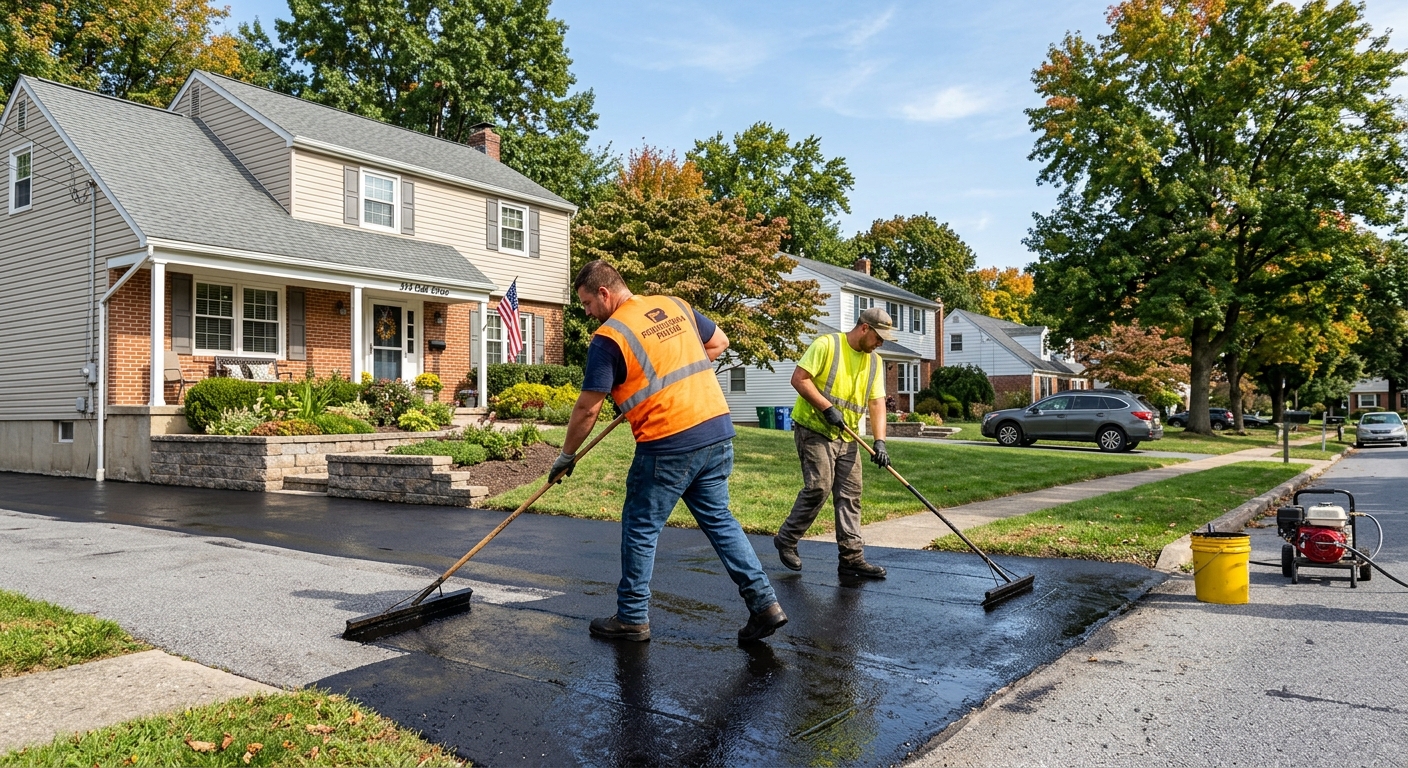
What a new driveway costs in Franklin
Franklin driveways come with a unique set of costs shaped by our housing stock and local conditions. With single-family homes making up 66.8% of the market and a homeownership rate of 55.3% (U.S. Census Bureau, ACS 2024), most driveway jobs here are true investments in long-term property value, not quick fixes for temporary tenants. What drives the cost isn’t just asphalt versus concrete—the real expense is hidden in what’s underneath your driveway. Northern Venango County’s glacial till and shale soils, plus constant freeze-thaw, mean more base material and thicker installations are non-negotiable here.
You’ll likely notice contractors’ bids vary by thousands of dollars. The reason? Corners cut below grade—where skimping can look fine at first, then settle, heave, and crack within a few brutal Franklin winters. Surface treatment and patchwork patch up the look, but a lasting job starts with a properly prepped base, appropriate to our soil and frost line depth. Don’t be distracted by a glossy finish or the bottom line—demand specifics on what’s beneath the surface for an apples-to-apples quote.
| Service |
Best for |
Lifespan |
Price range |
| Asphalt — full replacement with new base |
failed base, structural cracking |
20–30 yrs |
$3,200–$8,200 |
| Asphalt overlay / resurfacing |
sound base, surface cracking only |
8–15 yrs |
$1,350–$4,100 |
| Sealcoating — single application |
preventive maintenance on sound asphalt |
2–4 yrs |
$175–$650 |
| Concrete — new installation |
long service life, low maintenance |
30–50 yrs |
$4,600–$11,000 |
| Crack filling and patching |
isolated cracks under a quarter inch |
1–3 yrs |
$200–$800 |
| Gravel driveway |
rural, budget, long runs |
5–10 yrs with upkeep |
$900–$3,500 |
Estimates for a typical Franklin driveway. Square footage and base condition drive these figures more than material choice.
Franklin's ground and what it means for paving
The soils in Franklin and the rest of Venango County are nearly always glacial till over shale. Unlike the heavy clays you might find a county south, our local subgrade drains inconsistently and holds pockets of moisture all winter—prime conditions for frost heave. Glacial till is rocky and can seem stable when dry, but holds enough fine materials to keep water tight against a driveway base. Shale layers underneath can shift when soaked, compounding settlement issues as water comes and goes.
Combine that with a frost depth of 36 inches and harsh freeze-thaw cycles powered by Lake Erie’s weather patterns. The result is simple: driveways here need a much thicker compacted aggregate base than the state minimums in less demanding parts of Pennsylvania. Many Franklin driveways built between 1940 and 1960 were laid with minimal base—sometimes little more than compacted dirt—and have since settled or now slope awkwardly toward the house or onto the street. These approaches are often too narrow and low, left over from when cars were smaller.
All of this means a proper job today must start by correcting base depth and re-establishing grade. Don’t let anyone tell you a thin overlay alone will last here—local subgrade and old construction standards simply won’t support it for long.
How often should a Franklin driveway be sealed?
Sealcoating is routine preventive care for asphalt, but it’s no miracle fix. Done right, sealing protects the asphalt binder from sunlight, slows the loss of oils, and helps resist surface staining from oil and fuel. It certainly improves the appearance for a season. But it’s important to know what sealcoating can’t do—sealant does not add strength, fix base or structural cracks, or “rejuvenate” a failing driveway. If your base is compromised, sealing just freshens the surface until the underlying problems show through again.
Timing matters. Many sealing companies and DIY guides push for yearly coats, but that’s overkill in Franklin’s cold climate. Too-frequent sealing traps moisture and softens the surface, leading to peeling and early failure. Fresh asphalt should wait an entire season—at least six months—before its first seal to allow curing. After that, every two or three years is about right unless heavy traffic or chemical spills say otherwise.
Crack filling is actually more important than sealcoating for long-term health. Proper, hot-pour crack fill on anything wider than hairline blocks water from reaching—and freezing in—the base, which causes far more damage than surface oxidation. Done professionally, sealing should be applied by hand squeegee or heavy spray for a uniform coat, not the quick-and-cheap mist sprayed from a truck. A suspiciously low price—say under $175—usually buys watered-down product, little prep, and no guarantee.
What to put in a Franklin paving contract
If you’re comparing paving quotes in Franklin, don’t focus on the numbers alone—make every contractor spell out what you’re actually getting. In this region’s climate, how deep they dig, what kind of stone they use, and how they layer and compact it are more important than what asphalt mix goes on top. “Three inches of asphalt” means almost nothing without specifics, because material compacts by up to 25% once rolled—so you need to see “3 inches compacted” in writing, not just “as laid.”
Base design is a big deal here. Our severe frost depth (36 inches) and inconsistent subgrade—glacial till over shale—demand more aggregate than you’d see in milder climates. It’s common for underqualified crews to offer thin base or skip a lift, which always fails in a few years. Insist on contract details, not sales talk, so you can compare jobs on specs, not guesswork.
- Excavation depth (in inches) and confirmation of full removal of old material
- Aggregate base depth (typically 6–8 inches compacted here)
- Type of base aggregate (e.g., clean 2A modified or similar)
- Compaction method (plate compactor or roller) and confirmation of lifts
- Asphalt binder course thickness (e.g., 2 inches compacted)
- Asphalt surface course thickness (e.g., 1.5 inches compacted)
- Specific asphalt mix designation (PA mix # and source)
- Edge treatment: squared, sloped, or vertical tie-ins
- Final slope/crowning details for water runoff
- Written warranty terms, including exclusions
Why Franklin driveways fail from the bottom up
Driveway failures in Franklin almost always start beneath the surface. The key parts: your natural subgrade (the soil), a layer of compacted aggregate base, and then the asphalt or concrete up top. Each layer’s job is to distribute weight—the surface spreads the load to the base, and the base keeps it off the ever-shifting, freezing ground. If your base is thin, poorly compacted, or made from the wrong aggregate, nothing you do to the top layer will stand up for more than a handful of winters.
Franklin’s glacial till and shale subgrades interact badly with water, holding it near the surface until deep freezes. Water trapped in or under your base freezes, expands, and lifts sections of your driveway unevenly—a process called frost heave. That’s why this region’s 36-inch frost depth and constant freeze-thaw mean you need thicker, properly compacted base layers than in much of Pennsylvania. Surface cracks, potholes, and shifting edges—these all trace back to a lack of attention below ground, not surface wear alone.
What makes a cheap job cheap is what the eye can’t see: skipping deep excavation to remove old, soft material; skimping on gravel depth; using poorly graded or muddy stone; compacting in a single rush instead of in lifts; or simply laying new asphalt right over a failing base. You’ll see a clean finish on day one, and worsening cracks and dips by year three. The fix? Get the spec in writing: proper removal of old material, 6–8 inches of PA 2A modified (or better), placed and rolled in two lifts, then at least 3–4 inches of asphalt compacted in two layers. Upcharges for these details are real, but they’re the only way your driveway stands up in this market.
Permits and approvals for paving in Franklin
In Franklin and much of Venango County, most driveway resurfacing or replacement work in your existing footprint does not require a building permit. Especially in rural townships, resurfacing a gravel or asphalt drive on private land typically skips municipal review—it’s a place where that call to the borough office genuinely can be skipped if you’re not altering width or path.
The catch is the approach: anywhere your driveway crosses into a public right-of-way, you usually need approval—not from the borough, but through a PennDOT Highway Occupancy Permit if your drive meets a state route, processed through District 1. Oil City handles these permits for in-town drives, especially if you’re widening or moving an entrance within the city limits.
Whatever the scope, all paving contractors in Pennsylvania must carry Home Improvement Contractor (HIC) registration for jobs over $500 (verify at hic.attorneygeneral.gov), and workers’ comp is mandatory for all employers (check via WCAIS at wcais.pa.gov). Don’t skip those verifications—registration is what protects you under the Home Improvement Consumer Protection Act, which also guarantees you a three-day cancellation right.
One other point: just because it’s permitted doesn’t mean you’re free of stormwater responsibility. If your new or expanded driveway pushes runoff onto a neighbor’s side, or worsens pooling on city streets, you’ll be liable even if you “passed inspection.”
Where the water goes
Driveway longevity in Franklin is less about the actual paving than about where the water runs, especially with our harsh freeze-thaw cycles. Every driveway needs enough slope—generally 2% (a quarter inch per foot)—to shed water before it soaks into the base. A crown in the center suits wide drives, while narrow runs might use a single-direction cross-slope. When a driveway slants toward the garage, trench drains placed near the bottom of the slope are more reliable than hoping for perfect grading. Channel drains and daylighted outlets can remove water where grades are trapped, but dry wells only work in certain soils.
Our glacial till and shale soils drain differently than heavy clay, but neither moves water fast enough to ignore proper grading. Glacial till can trap pockets of water, leaving the base saturated right as winter freezes set in. Ponded water then expands overnight, heaving and wrecking even the most carefully built drive. Older Franklin homes, most built before 1980, often have settled or sunken approaches that now drain the wrong way, compounding this effect. If your drive needs regrading, make it part of the contract—the small upfront cost beats an overhaul after frost damage.
There’s also neighbor law: redirecting water onto an adjacent property, on purpose or by accident, is a liability issue in Pennsylvania, permit or not. Always design grading and drains to move water onto your own land as close to the road as possible. Shortcutting drainage is the fastest way to a short-lived driveway and an upset neighbor.
Frequently asked questions — driveway paving in Franklin
How long does a driveway installation take?
A typical Franklin driveway installation—from demolishing the old surface to completed paving—usually takes about two to five days, depending on the size and base work required. If the job includes significant regrading, full excavation, or needs time for sub-base settling (which is common here due to our glacial till and shale soils), expect the project to push toward the longer side of that window. After installation, new asphalt requires a few days of curing before heavy use. If you’re considering concrete, allow up to a week before parking a vehicle, as it needs more time to gain strength. Weather—especially rain or an unexpected snow—can add delays. Small overlays or patch repairs are much faster: usually completed in under two days, and sometimes for as little as $1,350–$4,100 for asphalt resurfacing.
Asphalt or concrete for a Franklin driveway?
The decision between asphalt and concrete in Franklin depends on your maintenance expectations, budget, and how you use your drive. Asphalt handles our freeze-thaw cycles well but does require regular sealcoating and crack filling to withstand the cycles of moisture and subgrade movement. Concrete costs more upfront—expect $4,600–$11,000—but lasts longer with less frequent care, especially if properly installed with extra base and control joints to handle our region’s soil. Both can heave and crack if the base is thin, but concrete is less forgiving of DIY repairs and salts can pit it more readily over time. For many, the long-term caller is asphalt for flexibility and concrete for set-it-and-forget-it—assuming you mind the higher price.
What are the signs of a failing driveway base?
Signs you need more than a surface fix are pretty clear in Franklin. Look for areas sinking or collapsing under car tires—especially where the cracks are “alligator” style, showing a pattern like a dried mud flat. Heaving sections that rise in winter and settle after the thaw mean frost is moving a weak or saturated base. Potholes returning after multiple patches, or whole valleys forming where the edge meets the lawn, are sure signs the subgrade is pumping water up through thin aggregate. These aren’t solved with a quick overlay or seal. A full replacement with new aggregate base—often running $3,200–$8,200—is needed to restore strength and stop the cycle for good.
What is the difference between crack filling and sealcoating?
Crack filling and sealcoating are very different tasks with different goals, especially in Franklin’s climate. Crack filling targets structural problems—using hot rubber or cold-pour filler to block water from infiltrating through cracks wider than a hairline. It’s the first defense against freeze-thaw heave that destroys our bases. Sealcoating, at $175–$650 per application, protects the surface from oxidation and weather, but doesn’t fix real cracks or add to the structure. Think of crack filling as medical care for existing wounds, while sealcoating is regular sunscreen and polish. For true value, invest first in thorough crack filling before paying for cosmetic seal.
Do I need an approach permit where my driveway meets the road?
If your Franklin driveway meets a state route, you absolutely need a PennDOT Highway Occupancy Permit—handled by District 1—before replacing or widening the approach. For drives accessing city streets, the permit is issued by the local city or township (Oil City does their own). Repaving an existing drive on your own land often skips permit except for approaches. Approaches are where inspectors look for proper grade, sight line, and drainage so water and debris don’t run off onto the public way. Skipping the permit can cause issues when you sell the house or if there’s an accident. Most realtors and closing attorneys will flag an unpermitted approach. The permit won’t change your paving cost—say $3,200–$8,200 for full asphalt—but you can’t skip the paperwork.
Does road salt damage driveways in Franklin?
Yes—road salt will affect both asphalt and concrete in Franklin, especially with our heavy winter snow and persistent freeze-thaw. On asphalt, salt can speed up surface drying and slightly worsen small cracks or crumbling edges, but it’s rarely a major cause of damage if the asphalt is sealed every couple of years. On concrete, repeated salt exposure leads to scaling (surface flaking) and spalling, particularly on newer pours not protected with a concrete sealer. Over time, these can shorten the lifespan of even a well-built drive that cost $4,600–$11,000. If you can, use sand or choose salt blends designed for driveways, not highways. Rinsing concrete in spring helps, especially after hard winters like we see in Venango County.
What slope does a driveway need for drainage?
In Franklin, driveway slope is crucial because we face deep freezes and glacial till that holds water against the base. Industry best practice calls for at least a 2% slope—about a quarter inch per foot—in any direction that moves water off and away from the house. Wider drives often need a slight crown in the center to split runoff. Crowning and sloping prevent water from pooling, which causes frost heave under the surface in our region. If your drive must slope toward the house or garage (sometimes unavoidable here), a trench drain or properly installed swale will stop water from reaching the foundation. Ignoring this for the sake of appearance or to save cost—on work ranging from $1,350–$4,100 for overlays up—will cost you more in repairs later.
What does sealcoating cost in Franklin?
Sealcoating a standard Franklin driveway typically runs from $175–$650 per single application, depending on size, how much edge prep is needed, and whether cracks are filled first. The biggest price swings come from the surface area and number of coats—the $175 end might cover a short, single-lane drive, but a large turnaround or extended pad will cost more. Be wary of quotes under $200, especially from itinerant contractors pressuring for same-day jobs; these often involve diluted material or a quick spray that peels within a season. A quality, hand-applied coat with the right prep is well worth the middle or upper end of the band, and paired with proper crack fill, will slow the damage from our snow-and-thaw climate.
How much does driveway paving cost in Franklin?
For a full asphalt replacement in Franklin—including removal of the old drive, new aggregate base, and fresh asphalt—you should expect to pay from $3,200–$8,200, with most jobs falling near $5,000 depending on square footage and approach work needed. Asphalt overlay (when the base still passes inspection) is more budget-friendly at $1,350–$4,100. Concrete is pricier: $4,600–$11,000 for standard pours, but potentially lasting up to 50 years. Travel surcharges from out-of-county plants are common, as asphalt is usually hauled in from Meadville and Clarion. Your final cost will hinge less on surface material and more on how much base work, grading, and drainage correction are built into the scope.