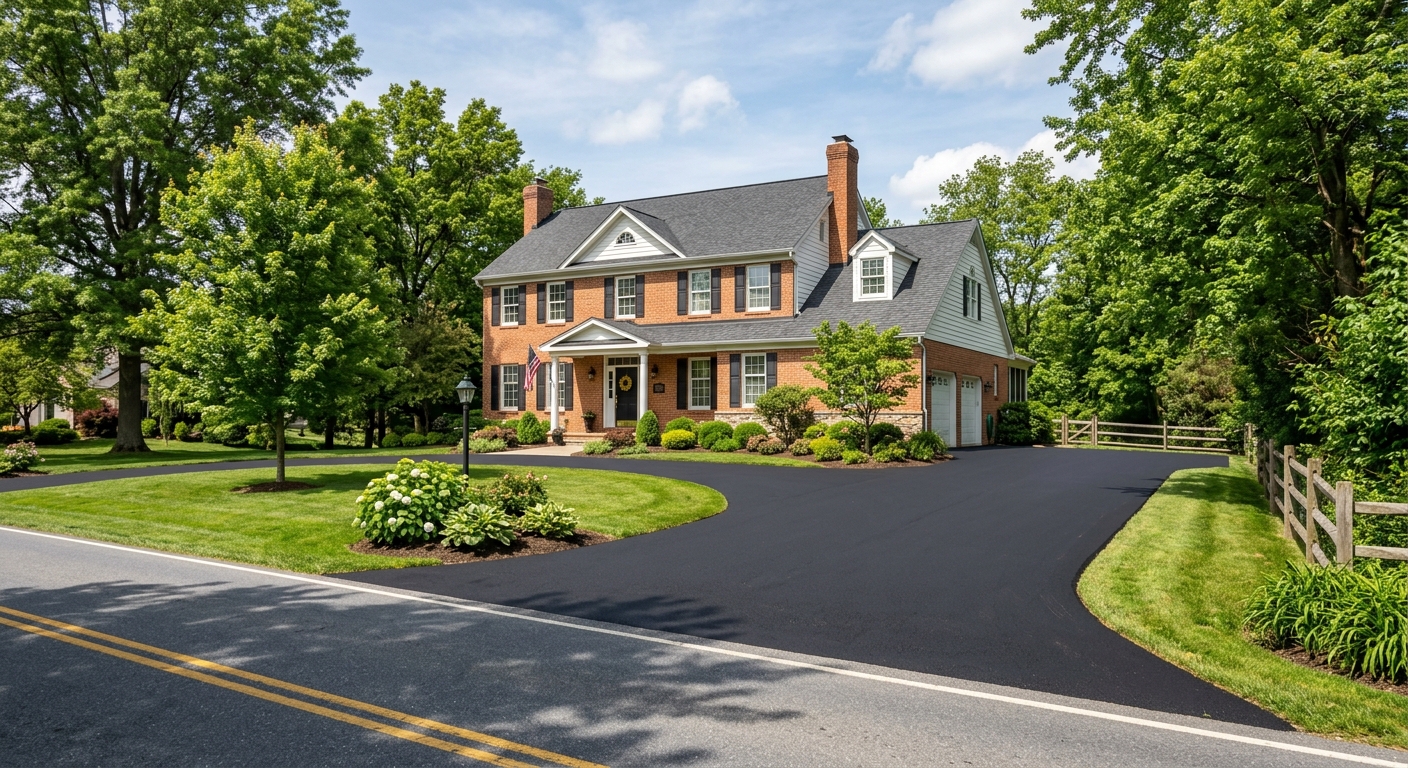
Driveway paving costs in Ambler — 2026
In Ambler, driveway paving is a significant investment for the area’s single-family homeowners—who make up just over a third of the households—and one that’s often necessary with the high share of homes built before 1980 (U.S. Census Bureau, ACS 2024). The 51.0% homeownership rate means that roughly half of residents are directly responsible for keeping up hard surfaces that have been aging for decades. The local glacial till and silty clay soils in eastern Montgomery County, including Ambler, demand a well-built stone base to prevent rutting and future repairs. Regional freeze-thaw patterns and humid summers shorten lifespans if paving is thin or improperly drained.
What drives cost more than the material is site-specific: the stone base thickness, compaction, drainage corrections, and whether the subgrade is stable. The big price differences between quotes usually come from what’s under the surface—work a homeowner can’t verify once it’s covered—so the lowest bid isn’t always money saved if the base fails within a few winters. Most Ambler driveways, thanks to their age and local subgrade, require more base rebuilding than most owners expect, especially if there’s visible edge crumbling or standing water after rain.
| Service |
Best for |
Lifespan |
Price range |
| Asphalt — full replacement with new base |
failed base, structural cracking |
20–30 yrs |
$3,600–$9,400 |
| Asphalt overlay / resurfacing |
sound base, surface cracking only |
8–15 yrs |
$1,550–$4,700 |
| Sealcoating — single application |
preventive maintenance on sound asphalt |
2–4 yrs |
$200–$750 |
| Concrete — new installation |
long service life, low maintenance |
30–50 yrs |
$5,200–$12,500 |
| Crack filling and patching |
isolated cracks under a quarter inch |
1–3 yrs |
$200–$800 |
| Gravel driveway |
rural, budget, long runs |
5–10 yrs with upkeep |
$900–$3,500 |
Estimates for a typical Ambler driveway. Square footage and base condition drive these figures more than material choice.
Door-knocking crews and leftover material
Paving draws its share of transient, out-of-area crews because the job is visible from the street and impossible for homeowners to inspect after the fact. In the tight suburban market of Montgomery County, including Ambler, these crews play on volume and move fast because neighbors are close enough to notice but not close enough to follow up if something goes wrong. Classic tells include claims of “leftover asphalt from a job down the block,” cash-only or today-only pricing, generic unmarked trucks with plates from another state or county, and no written contract—just a handshake deal.
One of the oldest ambushes is the oil-based spray sold as “sealcoating.” Instead of a true asphalt emulsion, you’ll get a thin black coat that looks good for a month and then flakes by winter, offering zero protection. Cash upfront is another red flag: the law in Pennsylvania says any contract over $500 must be written, with a three-business-day right of cancellation and no pressure to pay for work sight unseen. The Home Improvement Consumer Protection Act was written exactly for this: you are always entitled to a written contract and time to check credentials—no reputable Montgomery County crew will rush or skip this process. Waiving your insurance deductible is also specifically barred by law.
What actually protects you: take five minutes to verify Home Improvement Contractor registration at hic.attorneygeneral.gov, check the contractor’s workers’ comp on WCAIS (wcais.pa.gov), and make sure you have a written contract in hand. These steps, all free, close the door to every transient scam in this business.
Changing the footprint of a Ambler driveway
When you widen your driveway for a second car, add a parking pad, or extend toward a detached garage, you’re not just replacing what’s there—you’re building over untouched earth. This means installing a brand new stone base over undisturbed, often silty clay subgrade. In eastern Montgomery County, that means you need extra thickness to avoid the dips and edge breakdown common in older Ambler driveways. The seam where old and new paving meet will always be a potential weak point: it can settle differently or crack if not bonded and compacted properly.
Expanding a driveway isn’t just about pouring more material. Local stormwater rules may limit how much additional impervious surface you can add, and you’ll need to pay attention to property line setbacks to avoid encroaching on neighbors. If your project alters the curb, sidewalk, or street apron (the section connecting to the road), a building or street opening permit is generally required in jurisdictions like Norristown. For driveways connecting to township roads in Montgomery Township, a road occupancy permit comes through the Public Works Department.
Bottom line: Changing your Ambler driveway’s footprint demands more prep and red tape—always ask about permits and confirm the plan for proper base preparation first.
Getting thirty years out of a driveway
The longest-lasting Ambler driveways aren’t always the thickest—they’re the best maintained. First priority: seal cracks before water can seep below the surface, erode the stone base, and allow winter freezes to lift and break the pavement. Crack fill costs little and slows the cycle of bigger repairs. Next: keep the driveway edges supported. If the sides lack backing, cars running off will break down the edges quickly, leading to potholes.
Drainage matters: water should move away from the driveway—not pond or run toward the house. If you notice standing water after a big rain, the base may need regrading. Avoid parking heavy objects (like dumpsters or trailers) in one spot, as these create permanent impressions. With new asphalt, wait at least a few days before parking, and avoid turning the wheels while stationary in hot weather, or you’ll rut and scuff the surface.
In Ambler’s moderate freeze-thaw climate, de-icing presents a trade-off. Rock salt attacks concrete, leading to surface flaking (spalling). On asphalt, salt accelerates freeze-thaw cycles—everytime ice melts, then refreezes, it pries cracks wider. Alternatives like calcium magnesium acetate are less corrosive but cost more. For both materials, the best defense is to shovel early and maintain good drainage so less ice forms in the first place.
Sealcoating: what it does and what it doesn't
Sealcoating is pitched as the default maintenance for asphalt driveways in Ambler, and it has its place—within limits. What sealcoating actually does is put a thin barrier on the surface, protecting the asphalt binder from drying out under UV light, keeping fluids like gas and oil from eating into the surface, and evening out appearance. It improves “curb appeal” and keeps the surface looking newer.
But here’s the reality most brochures skip: sealcoating does not add any structural strength to an asphalt driveway, nor does it fill or repair existing cracks. If your driveway’s underlying stone base is settling or has failed, no amount of sealant will stop growing cracks or sunken spots. In fact, putting on new sealer every year can do more harm than good—layers will build up, trap moisture, and start to flake off in sheets. On fresh asphalt, sealing too soon (before the surface has fully cured, usually 6–12 months) traps volatiles and actually accelerates surface failure.
For most Ambler homes, sealing every 2–4 years is more than enough, with the first application waiting a full year after installation. The money is better spent on crack filling, which actually keeps water out of the base—the real enemy in our freeze-thaw cycles. If a crew offers to sealcoat well below the $200–$750 range, you’re likely getting a watered-down spray that washes off after the first rain—hardly worth the noise and mess. Ask for references, and make sure the work is done right or skip it entirely.
Driveway permits, approaches and stormwater rules
In much of Montgomery County, including Ambler, repaving or resurfacing an existing driveway (same size and alignment) generally does not require a new building permit, which saves you paperwork and fees. But when work includes the driveway approach—where your drive meets a public road—a separate permit is often needed, and not from the office you’d expect. For example, Montgomery Township issues a specific road occupancy permit for driveways connecting to township roads, handled by the Public Works Department and separate from general building permits.
If you’re making the driveway larger, local stormwater rules come into play: adding significant impervious surface can trigger drainage requirements, especially if your new paving changes water flows onto public right-of-way or onto a neighbor’s property. Remember, even if a permit isn’t required for basic resurfacing, directing runoff onto someone else’s land can create legal headaches and repair costs down the line.
Before signing anything, always verify a contractor’s Home Improvement Contractor registration at hic.attorneygeneral.gov, and check their workers’ comp coverage status at wcais.pa.gov. Both take minutes and protect you in ways no handshake can match. Written contracts over $500 are the law under the Home Improvement Consumer Protection Act.
Why you can't pave in February
Paving in Ambler is tightly controlled by the weather, and for good reason. Hot-mix asphalt can’t be installed effectively when outside temperatures drop below the ideal range. In our climate, with a winter design temperature of 14 °F, the material cools far too quickly to allow proper compaction—leaving the surface porous, weak, and prone to rapid failure. Local asphalt plants close in late fall and do not reopen until consistent spring warmth (often April), making hot material physically unavailable for months. Concrete driveways have the same story: they require above-freezing temperatures to cure properly, or the finished product will spall and lose strength. Ambler’s moderate freeze-thaw and humid summers mean working in the wrong weather simply isn’t an option for contractors who care about longevity.
If you see a crew advertising paving in late November, December, or February in our area, it’s a sign of corner-cutting or worse—they may be laying old material or using cold patch, which is not a long-term solution for driveways. The shoulder seasons (late spring and early fall) are when crews have schedule flexibility and plant supply; peak summer is fully booked and prices reflect higher demand. Book ahead, and if someone promises a bargain job outside of the May–October window, hold your wallet. Waiting for the right season gets you a driveway that lasts.
Frequently asked questions — driveway paving in Ambler
How much does driveway paving cost in Ambler?
The cost to pave a driveway in Ambler depends mainly on size and the condition of the base underneath, not just the surface material. For a typical replacement with new base, expect to pay between $3,600–$9,400 in 2026. Older Ambler homes often need extra prep because their subgrade can be unstable after decades of freeze-thaw cycles. If your base is solid, resurfacing can cost less, but most post-war Ambler homes will eventually need a full base rebuild. Get a clear, written scope of work so you know what’s happening below the surface—a big price difference between contractors usually reflects shortcuts you won’t notice until winter does the revealing.
How many freeze-thaw cycles does Ambler get?
Ambler sits in a part of southeastern Pennsylvania with moderate freeze-thaw conditions—enough to matter a great deal for driveway paving. Most winters, Ambler driveways are exposed to repeated melting and refreezing, which accelerates cracking and base breakdown if water can seep into the subsurface. This is why local contractors spend so much effort on drainage and thick stone base installation, especially for homes built before 1980. Well-maintained driveways in Ambler can still last 20–30 years, but every winter’s cycle is a test of quality. It’s one more reason why it’s worth investing $3,600–$9,400 once every few decades rather than patching problems every spring.
What does an asphalt overlay cost in Ambler?
If your Ambler driveway’s existing base is sound—no big dips, structural fissures, or major drainage concerns—an asphalt overlay is more affordable than a full rebuild. In 2026, expect to pay $1,550–$4,700 for a typical single-family home overlay in Ambler. This process adds 1½ to 2 inches of new asphalt atop the old surface, sealing out water and restoring appearance. If you have edge cracking or see water pooling after rain, an overlay may not last its full 8–15 year potential; in that case, a replacement is the safer investment. Get a base evaluation before deciding: overlays done on failing bases are a temporary fix at best.
Asphalt or concrete for a Ambler driveway?
The choice between asphalt and concrete in Ambler comes down to budget, maintenance preferences, and how you use the space. Asphalt is less expensive up front—$3,600–$9,400 for a full replacement—but needs periodic sealcoating and is more forgiving to frost heave. Concrete, while more costly at $5,200–$12,500, can last 30–50 years with minimal upkeep if it’s installed with good drainage and expansion joints. However, winter salting is rough on concrete, leading to surface flaking (spalling), especially in older Ambler neighborhoods. If you want maximum lifespan with minimal fuss and are willing to pay more, go concrete. If you expect to change the layout or just want easier repairs, asphalt fits most Ambler homes.
How often should I sealcoat my driveway in Ambler?
Ambler driveways do not need annual sealcoating—every 2–4 years is enough for most properties. Applying sealcoat too often leads to layers that crack and peel, while delaying too long leaves the asphalt vulnerable to sun and fluids. The first application should wait six months to a year after new paving, so the material can cure and volatiles escape. A typical sealcoating costs between $200–$750 and extends the appearance (not structure) of your driveway. Before sealing, spend money on crack filling, which truly protects the base from freeze-thaw cycles. Beware anyone offering cut-rate, same-day spray jobs—quality matters more than frequency for Ambler homes.
What slope does a driveway need for drainage?
Proper drainage is essential in Ambler because silty clay soils and moderate freeze-thaw cycles make water-related failure common. A good rule of thumb is a minimum slope of 2 percent—about ¼ inch per foot—away from buildings and toward permitted runoffs or stormwater systems. The actual slope may be adjusted to meet municipal standards, but this minimum helps prevent water from pooling and seeping under the surface. When you regrade or replace a driveway in Ambler, address drainage first: inadequate slope is a main reason driveways need expensive rebuilds before their time. Full replacement, which ranges from $3,600–$9,400, often includes correcting the base and grade.
Can asphalt be laid in cold weather?
In Ambler, asphalt paving has a hard seasonal cutoff due to both temperature and plant operations. Hot-mix asphalt needs ambient and ground temps above about 45–50 °F for proper compaction and long service life. Below that, the mix cools too fast and won’t bond or compact right, leading to rapid failure. Local plants along I-276 and US 202 close in winter, so there simply isn’t hot mix available until spring. Attempting to pave in December, January, or February risks wasting $3,600–$9,400. If a contractor proposes winter work, it’s a warning sign—better to wait and get it done right in season.
Do I need an approach permit where my driveway meets the road?
Yes—if your Ambler driveway connects to a township road or you are altering the curb, sidewalk, or apron, you typically need a permit for that approach work. In Montgomery Township, for example, the Public Works Department handles road occupancy permits specifically for driveway entrances. This requirement is separate from general building permits and is meant to protect both your investment and public infrastructure. For simple resurfacing with no changes at the street, a permit is usually not needed, but it’s always wise to confirm with your local code office. This step doesn’t add much to your project cost, especially compared to the full job’s price band of $3,600–$9,400, but it keeps you compliant and avoids headaches if the township inspects after work is done.
What causes concrete to spall or flake in Ambler?
In Ambler, the main culprit for concrete spalling (surface flaking) is repeated freeze-thaw cycles combined with winter use of de-icing salts. Water seeps into the surface, then expands as it freezes, causing the outer layer to break away in patches. Salt accelerates the process, especially if joints aren’t sealed or if water drains toward the slab. Older Ambler homes—over 90% built before 1980—are particularly vulnerable if their original driveways lack modern air-entrained mixes or weren’t installed with proper expansion joints. While good concrete driveways last 30–50 years ($5,200–$12,500), maintenance like sealing and prompt snow removal go a long way to prevent spalling. If you’re installing new, ask for air-entrained concrete and maintain a proper slope for drainage.