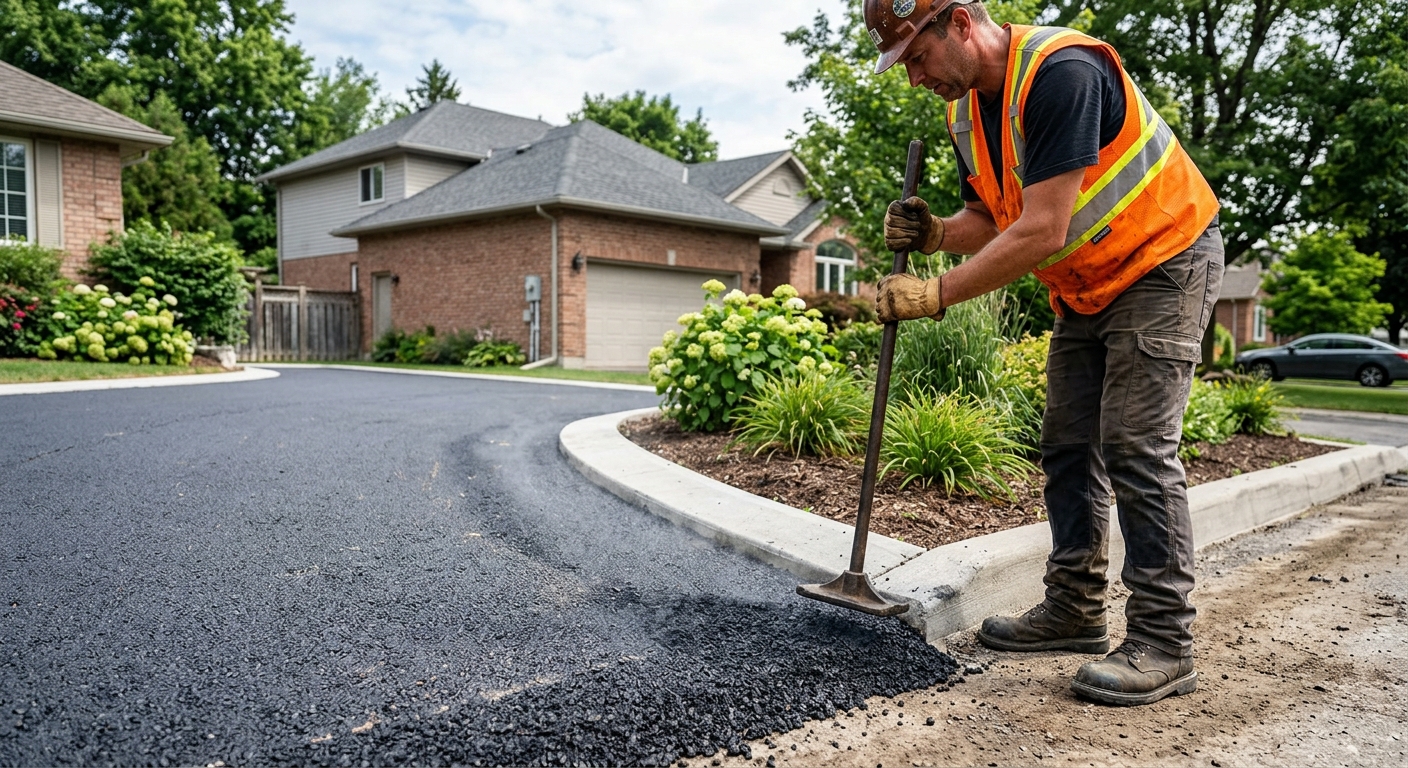
What a new driveway costs in Penn Hills
If you own a single-family home in Penn Hills—and more than 80% of the local housing stock is exactly that—driveway maintenance is right at the top of the to-do list. Over 70% of residents are owner-occupiers (U.S. Census Bureau, ACS 2024), which means the expense and decision belong to the homeowner, not a landlord. Most driveways here were poured or paved postwar, and they’re now facing the realities of time, weather, and Allegheny County’s soil.
Penn Hills sits on hilly ground mostly made of clay and shale, a combination that holds water and heaves in winter. Our freeze-thaw cycles—not just snow, but rain that freezes in the ground—are murder on driveway bases. This is the part most homeowners never see, but it’s where most of the price difference lives. Any two asphalt quotes can look near-identical at first, yet what’s under the surface can mean the difference between a driveway that lasts twenty years and one riddled with cracks in five. The cheapest quote can actually cost more in the long run if the contractor skimps below grade.
| Service |
Best for |
Lifespan |
Price range |
| Asphalt — full replacement with new base |
failed base, structural cracking |
20–30 yrs |
$3,300–$8,500 |
| Asphalt overlay / resurfacing |
sound base, surface cracking only |
8–15 yrs |
$1,400–$4,200 |
| Sealcoating — single application |
preventive maintenance on sound asphalt |
2–4 yrs |
$200–$650 |
| Concrete — new installation |
long service life, low maintenance |
30–50 yrs |
$4,700–$11,500 |
| Crack filling and patching |
isolated cracks under a quarter inch |
1–3 yrs |
$200–$800 |
| Gravel driveway |
rural, budget, long runs |
5–10 yrs with upkeep |
$900–$3,500 |
Estimates for a typical Penn Hills driveway. Square footage and base condition drive these figures more than material choice.
Finding a legitimate paver in Allegheny County
Choosing the right paving contractor in Penn Hills, or anywhere in Allegheny County, is less about flashy trucks and more about paperwork and history. Pennsylvania requires Home Improvement Contractor registration for any contract over $500—this is non-negotiable, so always verify a contractor's number at hic.attorneygeneral.gov. Legitimate operators carry mandatory workers’ compensation insurance, verifiable via WCAIS, even if they have a small crew.
In a crowded contractor market like Allegheny County—with its abundance of local asphalt plants and short haul distances—you want a paver who knows and uses those plants. If a contractor can’t name where their asphalt comes from, chances are good you’re dealing with a middleman or someone not actually doing the work. The best indicator is a local business address (not just a cell phone), owned paving equipment, and references from jobs done three or more seasons ago. Most driveways look fine the day they’re finished; only those that have survived several Penn Hills winters show a contractor’s real skill.
- Home Improvement Contractor number verified at hic.attorneygeneral.gov
- Workers’ compensation insurance checked via WCAIS
- Physical business address (not PO Box or just a mobile number)
- Owned equipment—not just rentals
- References from driveways installed 3+ years ago in Allegheny County
- Can name local asphalt supplier or plant
- Written contract with detailed scope, not just a price
- No demand for full cash payment up front
- Proof of local jobs in Penn Hills or nearby towns
- Clear explanation of drainage and base work
- Willing to walk you through warranty exclusions
- Responsive to questions about grading and subgrade compaction
Red flags: door-knockers, no written contract, out-of-state plates, vague warranties, or inability to show past jobs. In Penn Hills, these kinds of checks take minutes and weed out most of the risk.
Where the water goes
Water is the single biggest factor in driveway failure around Penn Hills—it’s not about how smooth the finished surface looks, but where the water goes every time it rains or snows. Heavy clay and shale under many Allegheny County homes mean water lingers after a storm, and freeze-thaw cycles make things worse: standing water soaks the base, then freezes and expands, heaving your driveway in winter and leaving cracks or low spots by spring.
A minimum slope of 2% (about a quarter inch per foot) is needed to shed water. On wide driveways, a crown (high point in the center) sends water toward both edges; on sloped lots, a single cross-slope can work, but every foot must be managed. If your driveway sends water toward your garage or house, that’s a recipe for both pavement and foundation trouble. Sometimes regrading is possible, but where grade can’t be fixed, trench or channel drains at the trouble points can collect and reroute water. The last step—“daylighting”—gets that water away from the driveway entirely, or into a dry well, if there’s nowhere for it to run off safely.
Redirecting driveway runoff onto a neighbor’s property is not just poor design—it’s a real liability in Pennsylvania, regardless of what a permit says. In Penn Hills’ terrain, a competent contractor will talk openly about grading and base prep, not just the surface.
Door-knocking crews and leftover material
Paving is one of the classic targets for fly-by-night crews—especially in visible neighborhoods like Penn Hills, where so many driveways were built between 1945 and 1975 and now show their age. You’ll hear the same story: “We have leftover asphalt from a job down the street,” or “We’re offering a one-day special—cash only to ‘save you the tax.’” Add an unmarked truck with out-of-state plates, and you have all the ingredients for a scam. These operators rarely give written contracts, rush you into immediate payment, and claim verbal promises count for something. “Sealcoating” is another favorite—they spray a thin, oily liquid that looks dark for a season but does nothing for longevity.
Here’s why this persists: in a dense market like Allegheny County with plenty of driveways and even more paving contractors, it’s easy for unscrupulous crews to disappear after a fast cash job. When you realize your “sealed” driveway is tracking black stains into your house or full of cracks the next spring, they’re long gone.
The law in Pennsylvania has caught up. Any project over $500 requires a written contract by the Home Improvement Consumer Protection Act (HICPA), along with a three-business-day right to cancel—no matter what the salesperson tells you. Never pay all cash up front; never sign anything on the spot. If anyone offers to waive your insurance deductible, that’s illegal. Five-minute safety: check the contractor’s HIC registration at hic.attorneygeneral.gov, verify workers’ comp at WCAIS, demand references from jobs over three years old, and politely send all “leftover material” crews on their way.
Comparing paving estimates in Penn Hills
Most differences in driveway quotes come down to what you don’t see. In Penn Hills, where the soil is clay-heavy and freeze-thaw cycles punish every shortcut, a good estimate spells out every step: measured square footage, how deep they’ll excavate, exactly what kind of aggregate (and how much of it) will be compacted, how many inches of asphalt (after compaction—not before), and what’s being done at the edges for support. Is the approach included? Will they handle grading and drainage, or just pave on top of what’s there?
Cleanup matters, too. Sloppy edges or piles of leftover dirt kill curb appeal and invite water trouble. Payment is another sign—a fair contractor takes a small deposit and the rest on completion, never everything in cash up front. Warranties are common, but read them: most only cover workmanship and explicitly exclude the cracking and settling that most people worry about. A one-line “asphalt driveway - $X” quote with no specs can’t be compared to anything. That’s how homeowners end up paying good money for a thin, underbuilt job that fails early.
| Line item |
What to look for |
Red flag if… |
| Area |
measured square footage stated |
eyeballed or absent |
| Excavation |
depth and disposal included |
'we'll pave over it' |
| Base |
aggregate type and depth in inches |
'proper base' |
| Compaction |
method, and done in lifts |
not mentioned |
| Asphalt |
courses and compacted depth |
'3 inches' unqualified |
| Drainage |
slope and water direction stated |
silent |
| Warranty |
what is covered and what is excluded |
verbal only |
| Payment |
modest deposit, balance on completion |
full cash up front |
What you need before paving in Penn Hills
In Penn Hills, most homeowners can repave or resurface their existing driveway—if it stays entirely on private property—without applying for a building permit through the municipality. This saves time and paperwork, but watch out: the rules change the moment your project touches the driveway approach, the section that meets the public road. Any work on the approach connecting to a state route requires a Highway Occupancy Permit from PennDOT District 11-0, not your local office. This is a common misunderstanding and a source of project delays.
Increasing the size of your driveway or changing your home’s impervious surface can trigger stormwater management requirements. And no matter what the permit says, draining water onto a neighbor’s property can land you in a dispute—or worse. A competent contractor will discuss where your stormwater goes before anything’s paved.
Every contractor must have a Home Improvement Contractor registration from the Pennsylvania Office of Attorney General, checked at hic.attorneygeneral.gov, and workers’ compensation coverage, verifiable through WCAIS. For any driveway above $500, you are also legally entitled to a written contract and a three-day cancellation window—tools designed to protect homeowners in circumstances like these. Never skip these checks in Penn Hills—even a genuine local business shouldn’t balk at showing proof.
The honest case for and against sealcoating
Sealcoating gets recommended for nearly every asphalt driveway in Penn Hills, but most of what you see and hear about it is sales talk. Here’s what it really does: it temporarily protects the asphalt binder from oxidation—the process that makes your driveway turn brittle and gray—and from chemical spills like oil or fuel. It also gives the surface a uniform black look, which many homeowners like. But sealcoating doesn’t add one bit of structural strength, can’t fill meaningful cracks, and most importantly, will not extend the life of a driveway whose base is already failing from Penn Hills’ notorious freeze-thaw cycles and poor-draining clay soils.
The part no one mentions is that sealing too often—especially every year—actually causes trouble. Layers build up and start to peel or crack off. Applying sealcoat to new asphalt (in that first season) is a mistake: solvents need time to escape, or the seal traps them, softening and damaging your driveway. A reasonable interval for most driveways is every two or three years, not annually, and the first sealing should only be after the surface is fully cured.
Crack filling, especially for the quarter-inch or smaller cracks that open in winter, matters more than sealcoating. A proper sealcoat job is thickly brush- or squeegee-applied, not sprayed on with a backpack sprayer in fifteen minutes. At $200–$650 for a single application in Penn Hills, very cheap offers almost always buy a quick, thin, oil-based spray that washes away or tracks into your house—not worth it. If your asphalt is already soft or wavy, sealing is no cure. Focus first on patching and fixing the base.
Frequently asked questions — driveway paving in Penn Hills
Can I pave over my existing driveway?
In many cases, you can pave an asphalt overlay directly over an existing driveway in Penn Hills, provided the current base and underlying pavement are sound. This is only suitable if you’re seeing surface cracking but no large areas of settlement or potholes—meaning the foundation beneath hasn’t failed. An overlay (or resurfacing) typically costs $1,400–$4,200, less expensive than a full replacement. However, if the driveway has soft spots, serious heaving from freeze-thaw, or drainage issues, overlaying on top only hides the problem for a few years. Penn Hills’ heavy clay soils magnify these risks. Have a contractor check the subgrade before deciding; sometimes patching and spot repair make more sense than a full overlay.
Do I need a permit to repave a driveway in Penn Hills?
You usually do not need a building permit to resurface or repave your existing driveway in the same footprint in Penn Hills; private residential driveways are typically handled without municipal right-of-way permits, as long as no changes are made near public sidewalks or roads. However, if you’re working on the driveway approach—where your driveway meets the public road, especially a state-maintained route—you will need a Highway Occupancy Permit from PennDOT District 11-0. Permits mainly become an issue for new construction, expansions, or work that changes drainage. Always ask your contractor how they handle permitting for your specific location before signing anything, especially if the work touches the public right of way.
Is sealcoating a scam?
Sealcoating itself isn’t a scam—the right product applied at proper intervals helps slow down surface oxidation and makes a driveway look newer. In Penn Hills, where freeze-thaw cycles are the real threat, honest contractors recommend sealing every two or three years, not yearly. A reputable sealcoating service should be brush- or squeegee-applied, not sprayed thinly in minutes. Beware of crews selling “sealcoating” for too-good-to-be-true prices under $200, as these often use oil-based sprays that do nothing for longevity. Sealcoating can’t fix structural problems, deep cracks, or poor base work; if the driveway flexes under foot or car, sealing is a waste. The scam comes when a cheap product is oversold as a cure-all. Ask for details, references, and examples of work lasting multiple years in Penn Hills’ climate, then decide if it’s worth it for appearance and modest protection.
Can asphalt be laid in cold weather?
Asphalt can technically be installed in cooler months in Penn Hills, but best results require ground and air temperatures consistently above 50°F. If it’s much colder—the risk in southwestern Pennsylvania’s fall and spring—compaction suffers, seams don’t bond, and the finished surface is more likely to crack when winter hits. Most contractors will not guarantee work done in mid-winter, even if local asphalt plants are open. If your only quotes are for a cut-rate project in November or early spring “before the plants shut down,” be skeptical. For your investment in a new or overlay asphalt driveway (which runs $1,400–$8,500), wait for stable, warm weather for a result that lasts.
What causes concrete to spall or flake in Penn Hills?
Concrete driveways in Penn Hills often show spalling (surface flaking or pitting) after a few harsh winters, especially if salt deicers are used. This happens because Southwest Pennsylvania’s freeze-thaw cycles force water into the surface, which then expands as it freezes and pops off bits of cement paste. The local clay and shale underneath also hold water, compounding the effect. Using the right air-entrained concrete mix, finishing properly, and letting the slab cure fully can reduce these risks. Expect to pay $4,700–$11,500 for a new, code-standard concrete driveway here, but no surface is totally immune to spalling in this climate—good drainage and avoiding harsh deicers make the biggest difference long-term.
What is the difference between binder and surface course?
In Penn Hills paving, the binder course is the first, thicker layer of asphalt installed atop the base. This course typically uses a coarser, stronger aggregate to absorb load and flex with minor subgrade movement—crucial on our hilly lots with clay and shale. The surface course is the smooth, finer-grained top layer that provides appearance and weather resistance. A full-depth new asphalt driveway (costing $3,300–$8,500) should specify both: usually 2–3 inches compacted binder and 1–1.5 inches surface. Skimping on binder or just laying surface directly on stone leads to early cracks and potholes, especially after Penn Hills winters.
What does sealcoating cost in Penn Hills?
A single application of professional-grade sealcoating for a standard two-car driveway in Penn Hills typically costs $200–$650. Factors in the range include size, prep work (like crack filling), access for equipment, and whether you’re getting a proper brush/squeegee application or a fast spray-on job. Be wary of prices at the very bottom end, as these may just be a thin, oil-based spray that does little beyond darkening the pavement for a season. You should only consider sealing once every two or three years, as overdoing it builds up layers that peel and crack. If your contractor offers a “deal” well below this range, ask what product and process they’re using, and demand references from multiple year-old jobs in Penn Hills.
Why are paving quotes in Penn Hills so different from each other?
Paving estimate differences in Penn Hills almost always come down to what happens under the surface. Two quotes might both say “new driveway,” but if one specifies the excavation depth, compacted base type, drainage slope, separate binder and surface courses, and clean edge treatment—and the other only lists a lump sum—you’re not comparing the same work. Penn Hills’ clay and shale soils demand thicker, expertly compacted stone bases to stand up to freeze-thaw cycles. A quote at $3,300–$8,500 for a full replacement can be money well spent if the subgrade is done right. Cheap jobs often skip base work and use thinner asphalt, which won’t last. Always require detailed line items for area, base, depth, and drainage, or you risk paying for a job that’ll fail quickly in our local climate.
What kind of soil is under Penn Hills driveways?
Most homes in Penn Hills are built on a mix of heavy clay and shale, typical of southwestern Allegheny County. This soil holds water after rain and drains slowly, which is why driveways heave and lift during freeze-thaw cycles every winter. Clay soils expand as they absorb water, then shrink and crack as they dry, putting a lot of stress on both asphalt and concrete driveways. Good paving contractors in Penn Hills compensate by using a thicker, well-compacted aggregate base, helping new asphalt (at $3,300–$8,500 for a full job) or concrete last longer. Some sites may also need additional drainage solutions to handle runoff and avoid early pavement failure.