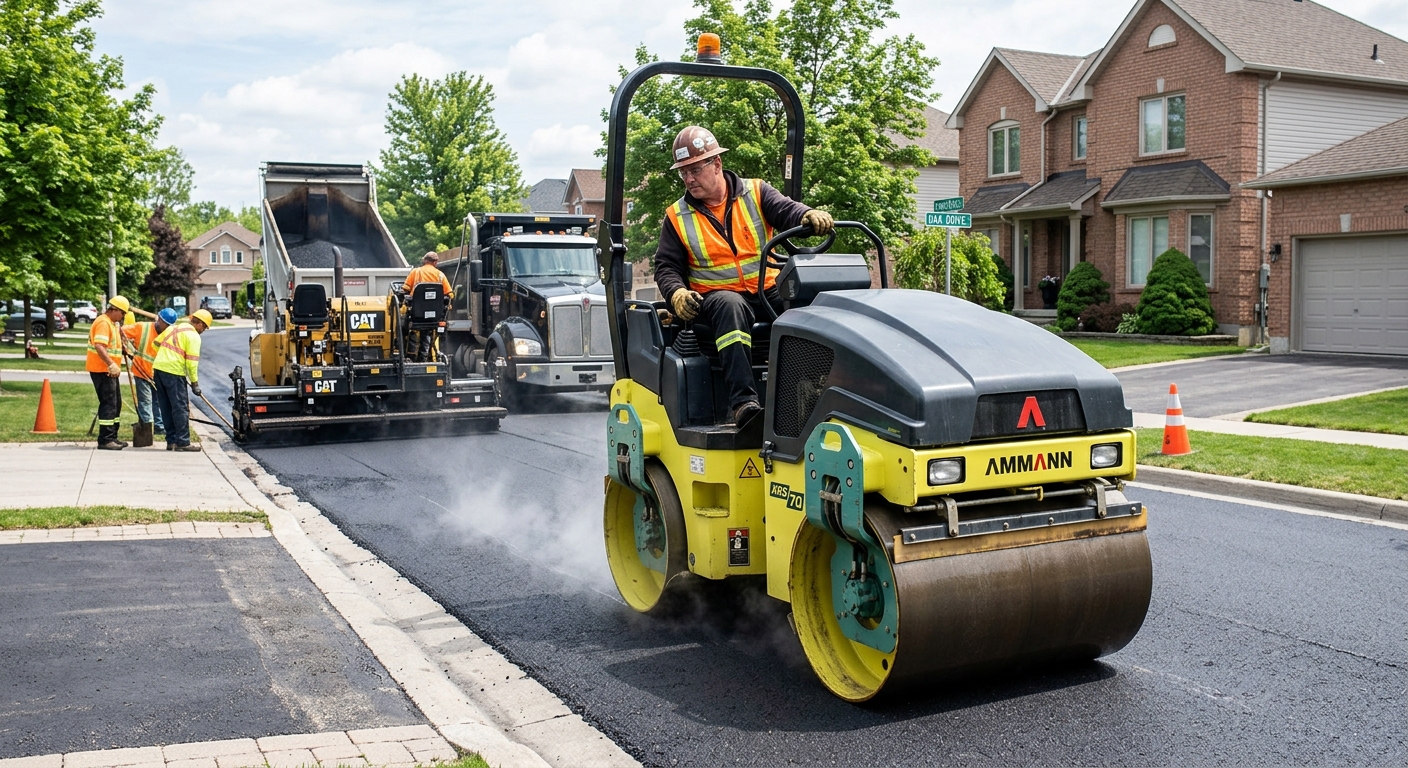
Driveway paving costs in Antis — 2026
In Antis, where 71.2% of homes are single-family and the homeownership rate reaches 79.5% (U.S. Census Bureau, ACS 2024), driveway paving is a significant expense that comes with owning and maintaining a detached house. This region sits on limestone and shale subgrade common to Blair County, a fact that directly impacts installation requirements and price. The area’s tough winters—long heating season, ground frost depth down to 36 inches, and regular freeze-thaw cycles—mean that the cost differences you see in driveway quotes usually hide in the groundwork, not the finished surface. What you’re paying for is what ends up under the asphalt or concrete: proper excavation, thick base, drainage design, and the right compaction. If two quotes look miles apart, it’s because one of them skipped steps you’ll only notice after the third or fourth winter. If the base is wrong, nothing you do on top will last. Don’t shop just by what meets the eye or a smooth final finish.
| Service |
Best for |
Lifespan |
Price range |
| Asphalt — full replacement with new base |
failed base, structural cracking |
20–30 yrs |
$3,400–$8,700 |
| Asphalt overlay / resurfacing |
sound base, surface cracking only |
8–15 yrs |
$1,450–$4,300 |
| Sealcoating — single application |
preventive maintenance on sound asphalt |
2–4 yrs |
$200–$650 |
| Concrete — new installation |
long service life, low maintenance |
30–50 yrs |
$4,800–$11,500 |
| Crack filling and patching |
isolated cracks under a quarter inch |
1–3 yrs |
$200–$800 |
| Gravel driveway |
rural, budget, long runs |
5–10 yrs with upkeep |
$900–$3,500 |
Estimates for a typical Antis driveway. Square footage and base condition drive these figures more than material choice.
What's under the asphalt matters more than the asphalt
Paving in Antis or anywhere in Blair County is ultimately about what you don’t see. Every durable driveway in this region starts with proper subgrade preparation: that’s the native soil (in this case, limestone and shale), shaped and compacted to support what’s above. Next comes a crushed stone or aggregate base, compacted in layers, followed by hot asphalt. Each layer spreads the load—if you skimp on the base or fail to compact each lift of aggregate, no amount of thick surface asphalt will make up for it.
The main threat here is frost heave. Our 36-inch frost depth means winter cold drives deep, freezing any moisture trapped in the soil. As water freezes, it expands, forcibly lifting the driveway, then dropping it unevenly as it thaws. The wrong base depth, poor drainage, or skipping a subbase will show up as cracks, settling, or upheaval—usually after a couple of freeze-thaw cycles when the warranty is long forgotten. Limestone and shale subgrades especially demand a thick base—at least 6–8 inches of PennDOT-certified 2A modified stone compacted in 2–3 inch lifts. If it isn’t written into your contract, it probably won’t happen.
The low quote usually means less or no excavation, a thin and loose base, or laying new asphalt over an old, failing drive. Those shortcuts are invisible at final inspection and turn up as headaches after a few years. Insist your written estimate calls out excavation and a minimum of 6–8 inches of compacted aggregate base, installed in lifts, with proof of compaction at each stage. It costs more up front, but the alternative is paying double five years out.
Asphalt or concrete for a Antis driveway?
For Antis homeowners, our region’s freeze-thaw cycles should steer you toward asphalt for most installations. Asphalt is flexible, so when Blair County’s winter frost heaves your driveway even by a small amount, the surface tends to rebound—flexing back instead of cracking. Concrete is rigid: when it moves, it cracks, especially after several snowy winters or when salt is used to de-ice (which is hard to avoid on icy Antis driveways). Salt eats away at the surface of concrete, causing spalling and scaling, which is the most common way concrete fails in our area, not simple cracking.
Concrete does offer a longer potential lifespan—30 to 50 years if you never use salt-based de-icers and keep up with sealing joints. But the up-front cost is higher, and you have to change your winter habits to preserve it. That’s a tough sell for most folks in our climate. Asphalt is less expensive, easier to repair, and more forgiving after tough winters. For some rural lots or long driveways, gravel is the value choice if you’re willing to perform regular top-dressing. Pavers are legit for decorative value and repairability, but cost nearly as much as concrete. No solution is perfect—match your choice to your budget and how much maintenance you’re ready to do.
| Option |
Installed cost |
Maintenance |
Freeze-thaw performance |
Lifespan |
| Asphalt — new install |
$3,400–$8,700 |
sealcoat every 3–4 yrs |
excellent, flexes |
20–30 yrs |
| Asphalt — overlay |
$1,450–$4,300 |
same |
good if base is sound |
+8–15 yrs |
| Concrete |
$4,800–$11,500 |
low, avoid de-icing salt |
fair, spalls with salt |
30–50 yrs |
| Pavers |
$7,700–$11,500 |
individual units replaceable |
good, settles gradually |
25–50 yrs |
| Gravel |
$900–$3,500 |
top-dress every 2–3 yrs |
excellent drainage |
indefinite with upkeep |
Permits and approvals for paving in Antis
For most driveways in Antis, replacing or resurfacing an existing driveway in its original location usually does not require a building permit. The exception is if you are widening the driveway or changing where it meets the public road; in such cases, you’ll typically need a driveway or occupancy permit from the local municipality. If your driveway connects to a main road like U.S. 220 near Hollidaysburg, the permit comes from PennDOT District 9, while local municipal offices handle driveways on township and local borough roads.
Pay attention to stormwater: if repaving increases the amount of impervious surface, local requirements may trigger drainage improvements. Regardless of permit status, you can be held liable if you direct runoff onto a neighbor’s property—a common issue on steep hillside lots found in the postwar build-outs around Antis and Hollidaysburg. Careful grading and underdrain work are sometimes required on these lots, especially with limestone and shale subgrade that can settle badly if water isn’t managed.
To avoid legal and financial trouble, only hire contractors registered under the Pennsylvania Office of Attorney General’s Home Improvement Contractor (HIC) program for jobs over $500—verify at hic.attorneygeneral.gov. Also, Pennsylvania requires all employers to carry workers’ compensation insurance; check documentation through the WCAIS system (wcais.pa.gov).
Sealcoating: what it does and what it doesn't
Sealcoating will not make a weak driveway strong, but it does offer real preventive value for sound pavement in Antis. A properly applied sealcoat slows oxidation from sun and rain and protects against gasoline, oil, and de-icer drips that soften and erode asphalt’s binder. It’s also popular for freshening up appearance, covering faded or lightly stained surfaces.
But sealcoating does not add structural strength, heal cracks, or save a driveway with a failed base. Layering sealcoat every year leads to ugly peeling and alligatoring. Seal new asphalt too soon—especially in a cold climate like Antis, where the asphalt binder takes longer to cure—and you’ll trap volatile compounds, making the surface more likely to suffer from early cracking. Wait 90 days to a season before the first application, then reapply every three or four years, not annually. The single biggest bang for your buck in maintenance is prompt crack filling; water working into the base will wreck pavement faster than a lack of surface sealer ever will.
Be wary of ultra-cheap sealcoat quotes, especially if crews offer quick spray-on jobs at the low end of $200–$650. Proper application is broomed or squeegeed on, at full coverage rate with the correct dry time. Ask questions, and if it sounds too good to be true, it probably skips steps that matter.
The specifications to demand in writing
In Antis, where frost depth goes down to 36 inches and limestone and shale soils often complicate things, it is essential to get every important figure in writing from your paving contractor. Don’t settle for “we’ll put down three inches”—that’s a meaningless number unless it’s clear whether they mean uncompacted, compacted, base or surface, and what material is specified for each layer.
The only way to compare bids is by comparing specs. For our climate, you want at least 6 inches of compacted aggregate base, installed in 2–3 inch lifts, and compacted thoroughly after each lift. The asphalt surface usually goes down in two layers—a base and a surface or wearing course. Specs should state “as compacted,” because hot mix shrinks significantly from as-laid thickness, especially in cool Pennsylvania air. If there’s a patch or overlay, demand to know the edge treatment (tapered, saw-cut), crack repair method, and the specific type of asphalt mix (give a job-mix formula or PennDOT reference).
- Excavation depth (inches below finished grade)
- Aggregate base depth (inches, as compacted)
- Type of aggregate (e.g., PennDOT 2A modified)
- Compaction method (roller weight, plate compactor on edges)
- Base and surface asphalt course thickness (as compacted, not loose)
- Asphalt mix designation (such as 9.5mm or 19mm for base, PennDOT or equivalent)
- Lifts for installation (number and thickness of each layer per lift)
- Edge treatment (tapered, saw-cut, or step-down to lawn or curbing)
- Drainage plan (grade away from buildings, detail if trench drains or underdrains are specified)
- Clean-up, joint sealing, and final inspection provisions
Drainage: the failure nobody plans for
The number one killer of driveways in Antis is water—specifically, water that isn’t shown a clear path off the slab. Drainage isn’t just a finishing touch. A minimum surface slope of 2% (about a quarter inch per foot) is best to move water, achieved by crowning the driveway center or establishing a steady cross-slope away from buildings. On steep hillside lots—common in Antis and Hollidaysburg’s postwar developments—if your drive slopes toward your garage or home, expect trouble unless trench or channel drains are installed to intercept runoff before it enters the structure.
In limestone and shale areas, poor drainage means water sits against the base, seeps down, freezes, and drives frost heave from beneath. Each thaw cycle makes the problem worse: wet base materials expand and contract, leaving soft spots, settlement, and cracks you’ll see in year two or three. If you can’t daylight (discharge) the water safely, dry wells may be needed. Just don’t push water onto your neighbor’s lot—redirecting runoff is a legal liability in Pennsylvania, permit or not.
Heavy clay soils can be especially troublesome because they trap moisture right at the base. If your site doesn’t drain naturally, discuss underdrains and additional grading with your contractor. You only get one shot to fix drainage during paving; after that, every correction costs twice as much and leaves scars.
Frequently asked questions — driveway paving in Antis
Why are paving quotes in Antis so different from each other?
The wide spread you see in driveway paving quotes around Antis almost always comes down to what’s planned for the site preparation and base. Two bids might both call themselves “full replacement,” but one might specify 8 inches of compacted stone base—ideal for Antis’s limestone and shale soils and 36-inch frost line—while another simply lays a thin layer of new asphalt over whatever’s there, skipping excavation and real base work. The difference in price is buried where you can’t see it, but it shows up in five winters. The upfront difference between $3,400–$8,700 for a full asphalt replacement buys a much longer-lasting, lower-maintenance driveway. Always insist on details in writing and compare specs, not just price.
Asphalt or concrete for a Antis driveway?
In Antis, freeze-thaw cycles and heavy winter salting point to asphalt as the more resilient choice for most homes. Asphalt is flexible and survives winter heaving by deforming and rebounding; concrete is rigid, so when it moves, it often cracks or, more likely, spalls from de-icing salt—an outcome most folks here can’t realistically avoid. Asphalt has a typical installed price of $3,400–$8,700, while concrete costs $4,800–$11,500 upfront. Concrete can last upwards of 40 years with perfect care (salt-free, frequent sealing), but in typical Antis conditions, the honesty is most people find asphalt more repairable and less fussy over the long run. If a zero-salt driveway isn’t realistic, asphalt is usually the better value.
When can I seal a brand new asphalt driveway?
Local paving in Antis needs a little patience before laying down the first sealcoat. A freshly paved asphalt driveway releases oils and volatiles as it cures—if you seal too soon, especially in Blair County’s cooler climate, you’ll trap these compounds and risk premature failure like early cracking and scaling. The best practice is to wait at least 90 days, but ideally a full paving season before applying sealcoat. Sealcoating properly at the right time, then repeating every three to four years at $200–$650 per application, gives the protection you want without buildup or peeling. Rush the job and you may be chasing repairs much sooner.
How do I verify a paving contractor in Pennsylvania?
Pennsylvania law protects homeowners on jobs over $500 by requiring paving and other home improvement contractors to register with the Office of Attorney General through the Home Improvement Contractor (HIC) registry, which you can check at hic.attorneygeneral.gov. In addition, all employers must carry workers’ compensation insurance, and you can check their status at wcais.pa.gov. If a contractor is unregistered or uninsured, don’t hire them. In Antis and elsewhere in Blair County, these checks matter far more than how glossy the truck looks or how low the quote sits. Getting it right means better recourse if anything goes wrong with your driveway.
What does sealcoating cost in Antis?
For a typical single-family Antis driveway, a single proper sealcoating falls between $200–$650 in 2026, with most owners seeing quotes in the $375 range. Beware of very low offers—they often mean a fast spray job without proper cleaning or coverage, which will flake and fail quickly. A careful job, especially for driveways with previous cracks or rough patches, should include thorough cleaning, edged application, and enough material to actually coat the surface. Skip the cheapest option and seal every three to four years for meaningful protection against local winter and sun.
When is the best time of year to pave in Antis?
Best paving results in Antis come from late spring through early fall, when temperatures are reliably above 50°F. Warm air is crucial for thorough asphalt compaction and proper curing—cold ground or air means the hot mix sets too fast, and you end up with soft spots and poor bonding. Heavy rain and leaf drop late in fall also complicate work. If you’re planning a full replacement at $3,400–$8,700, avoid early spring freeze-thaw and late autumn cold snaps. Always ask your contractor about the weather window—they should reschedule if the conditions aren’t right.
What slope does a driveway need for drainage?
In Antis, with the region’s freeze-thaw pattern and soil that drains slowly, aim for at least a 2% slope—about a quarter-inch drop per foot—for any hard surface driveway. This can be achieved by gently crowning the driveway center or sloping the entire width away from buildings and toward daylight or a drain. Proper drainage at installation costs more but prevents water infiltration, freeze-thaw damage, and lawsuits from runoff ending up on your neighbor’s lot, all of which are real risks in Antis Township build-outs. On a typical local driveway, failing to get the grade right is the biggest reason the investment—up to $8,700—fails early.
What are the signs of a failing driveway base?
The early warning signs of base failure in an Antis driveway are subtle: uneven settling, depressions where water ponds and never dries, cracks that widen and breed “alligator” patterns, and sections that retread themselves after every winter. If the drive has been resurfaced multiple times and soft spots keep returning, the base is likely the problem, not the surface. Limestone and shale soils make it more likely here, coupled with 36-inch frost lines. Major repairs—often in the $3,400–$8,700 range for full replacement—are the only permanent fix. Patchwork and overlays may buy time, but base issues never fix themselves.
Does Antis have local asphalt plants?
Asphalt and aggregate for Antis jobs are supplied by plants in the nearby Altoona-Duncansville corridor, which keeps haul prices reasonable but does add a bit for jobs out on Antis’s more rural edges. You won’t find a commercial asphalt plant or stone quarry inside Antis Township proper, but close proximity to Altoona means fresh material can reach your site within an hour of mixing, ensuring proper temperature for a strong install. This is figured into the area’s typical asphalt price of $3,400–$8,700, so you aren’t paying big markups unless you’re farthest from the plants.